

Master
Krabat
Person Krabat
We know and distinguish KRABAT in different guises. The personality and variously portrayed characters of KRABAT have their roots in Lusatia.
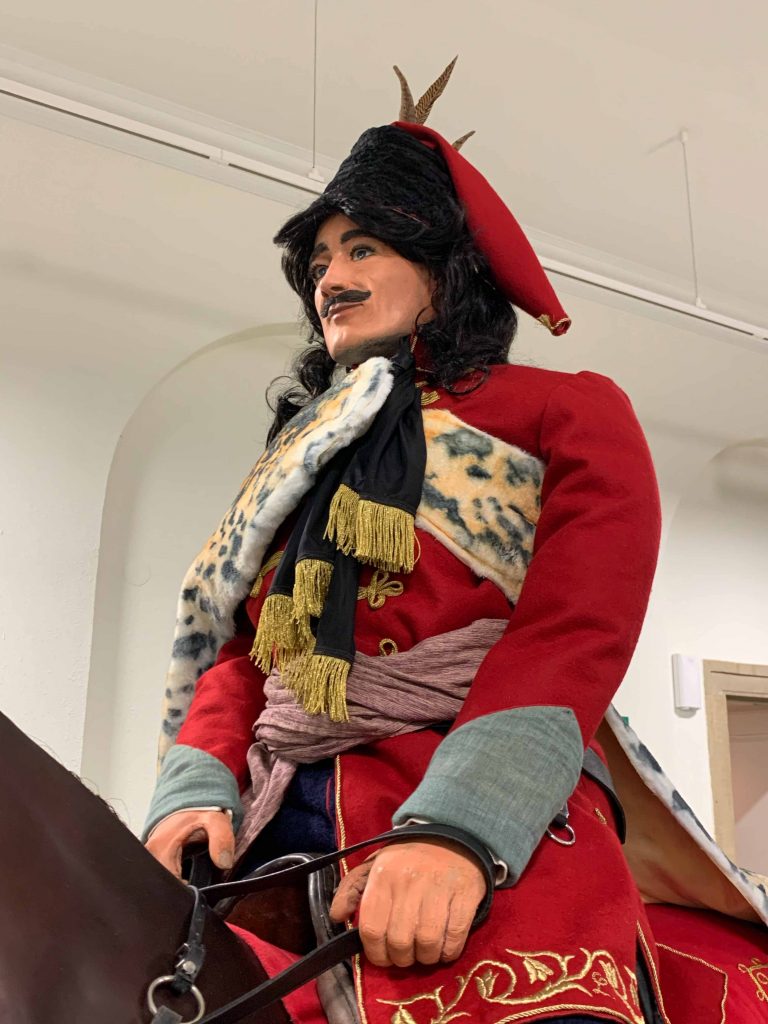
KRABAT – Johann von Schadowitz
Born in 1624 as Janko Šajatović in Jezernice, Žumberak region (Croatia).
As a cavalryman in a Croatian military unit, he came to Dresden at the request of the Saxon Elector Johann Georg II. During his more than 30 years of service to the Saxon electoral house, he achieved great honor and, in gratitude, received an estate in Särchen from Johann Georg III in 1691 as a retirement home. His vast knowledge, his courage to create, and his deep faith made him the legend “KRABAT.”
As adjutant general to the Elector and a member of the Croatian nobility, Johann von Schadowitz died under his German name on May 29, 1704, in Groß Särchen. On June 2, 1704, he was buried in the Catholic Church of the Assumption of St. Mary in Wittichenau.
Between legend and reality
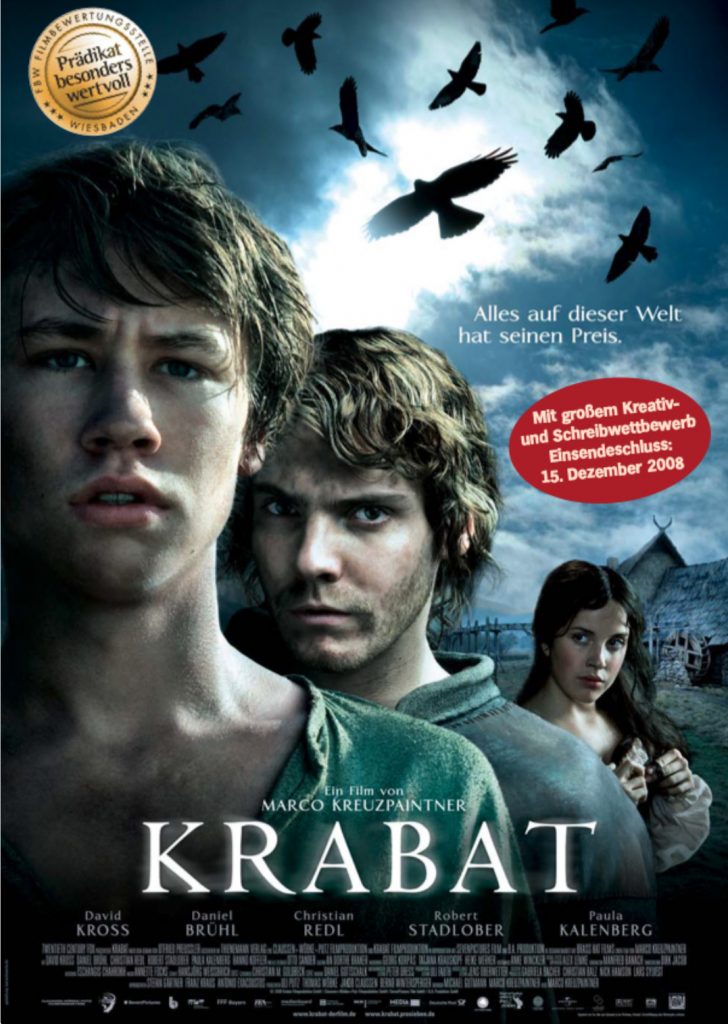
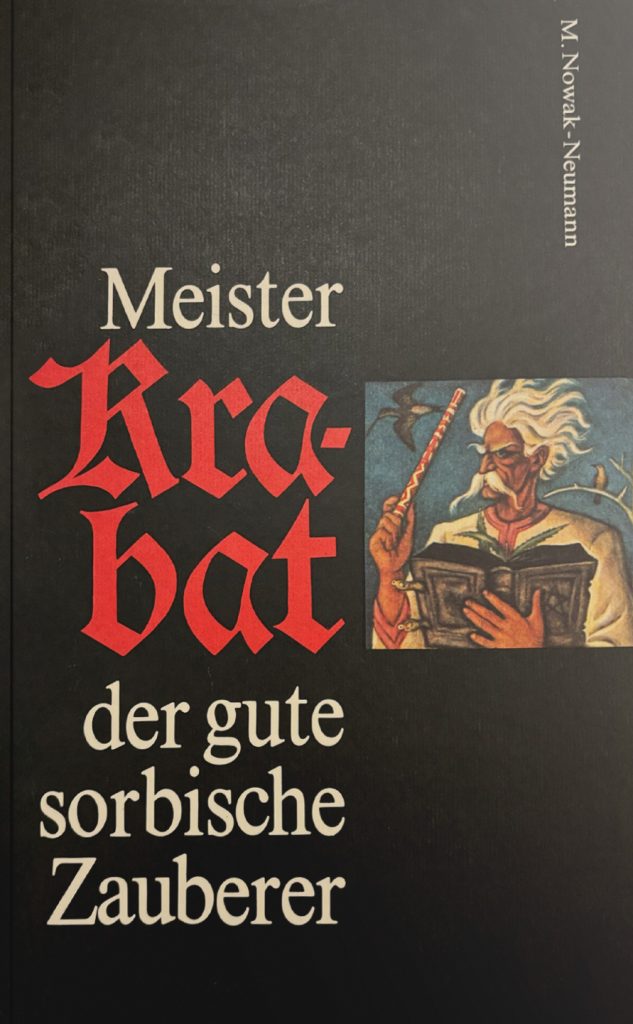
KRABAT grew up as the stepson of poor parents in the village of Eutrich (Jitk) on the edge of the Sorbian Heath. Even as a child, he had to earn his own living as a shepherd boy, for poverty was rife. Once again, as he was wandering through the countryside, he was surprised by the dark night and lost his way in the forest and pond landscape around Hoyerswerda. After a long and arduous journey, he reached a mill known as the “Black Mill.” The Black Miller and evil sorcerer liked the inquisitive Krabat and took him in to teach him the miller’s trade and many other things. KRABAT seemed to be a clever lad to the miller, and because the twelfth journeyman had just met a sad end, he took him on as an apprentice.
KRABAT quickly realized that the miller could do more than just grind grain. He was initiated by his master into all kinds of incantations, spells, and witchcraft, and soon the inquisitive apprentice surpassed his master in strength and knowledge. KRABAT now knew that death awaited him. In the past, such disobedient apprentices had drowned in the mill stream or fallen into the water wheel. But KRABAT knew of a protection against the sorcerer’s power. A mother’s love—no sorcerer can do anything against that.
KRABAT quickly traveled home and confided in his mother. Although she was initially horrified by her son’s transformation, she agreed to help him. KRABAT knew that the master would turn him into a crow and gave his mother a hint. When she reached the “Black Mill,” she had to watch as the sorcerer turned all the miller’s apprentices into twelve black ravens, among which she was to recognize her son. If she succeeded, both would be free; if she failed, KRABAT would be doomed to death. The mother recognized him immediately by the agreed sign (KRABAT put his head under his left wing) and redeemed him. The miller had no choice but to let them go, and KRABAT fled home with his mother as quickly as possible. It was only later that the master noticed that KRABAT had stolen his spell book. But by then it was too late, and KRABAT was long gone.
In his homeland, he became known as a good wizard and, after many adventures, faced the “Black Miller” in a final battle.
Krabat – Ambassador of the Upper Lusatia
The person of “Johann von Schadowitz” is historically documented and is inseparably linked to the legendary stories of KRABAT.
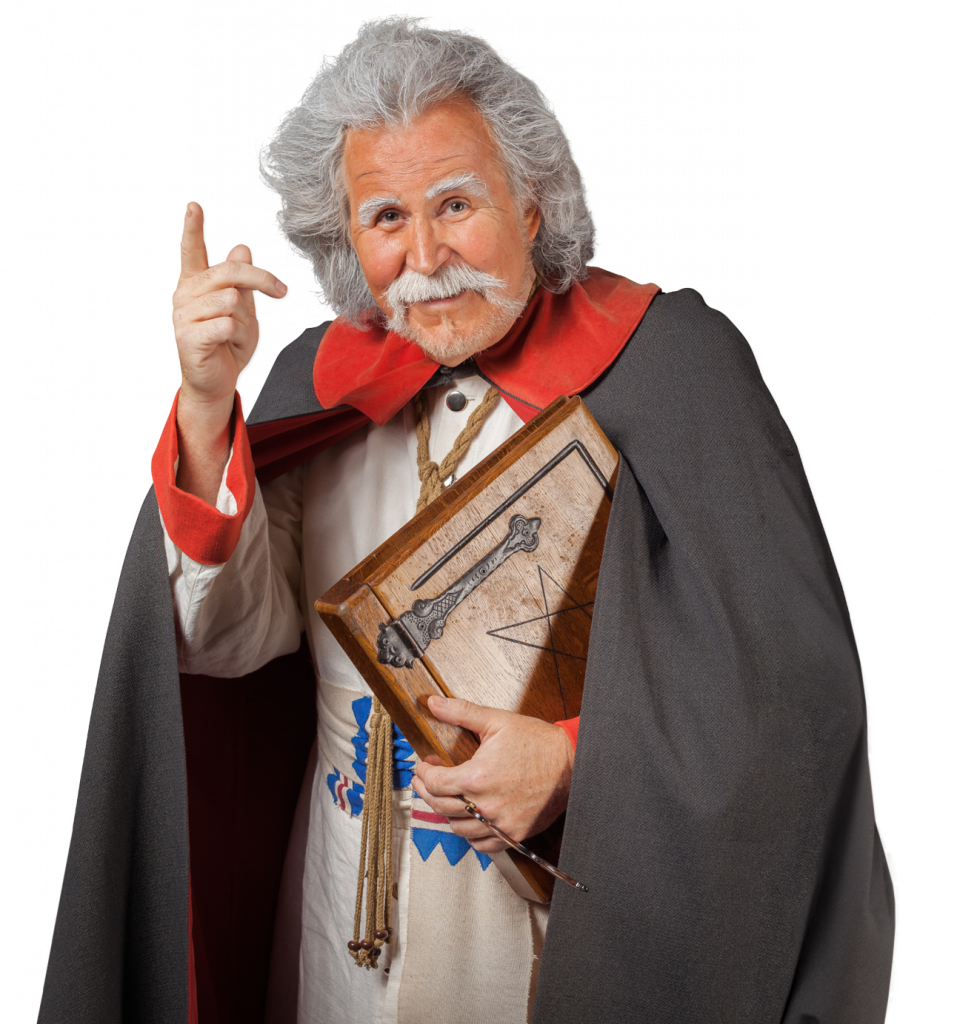
Wolfgang – KRABAT – Kraus has made it his mission to keep this person alive and to illustrate his legacy. In the old farmstead of Groß Särchen, as ambassador of Upper Lusatia, he tells the stories of the former Croatian bodyguard and the still palpable good spirit of KRABAT.
Let yourself be enchanted!
A research project entitled:
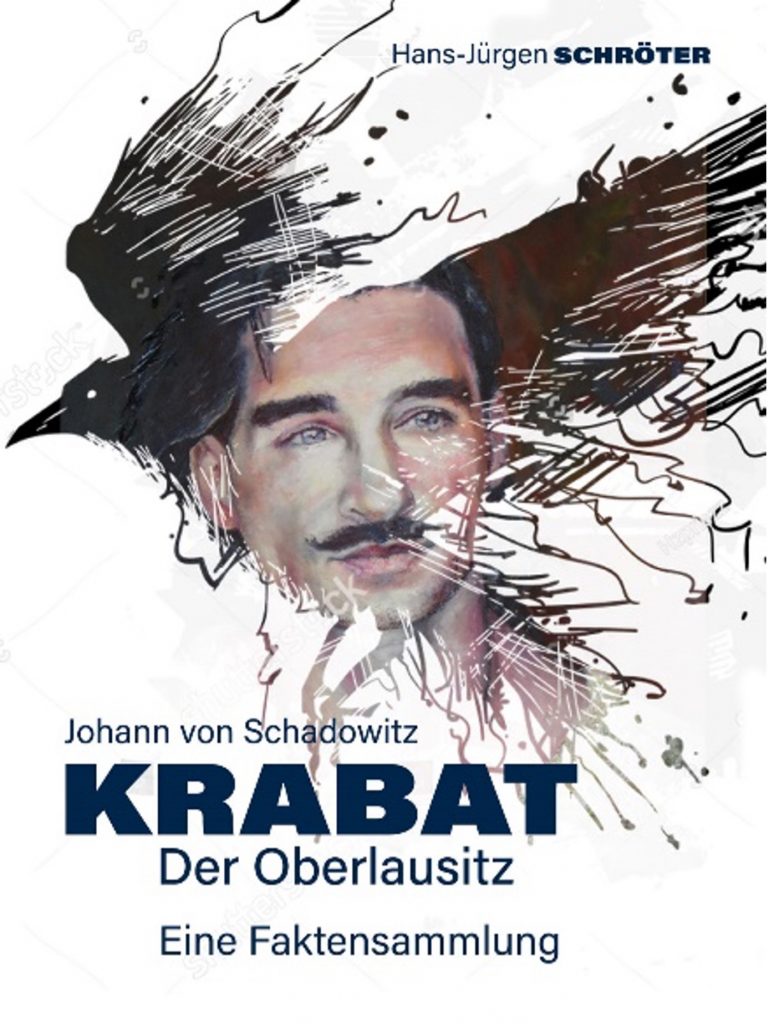
„Johann von Schadowitz – KRABAT der Oberlausitz“ ©
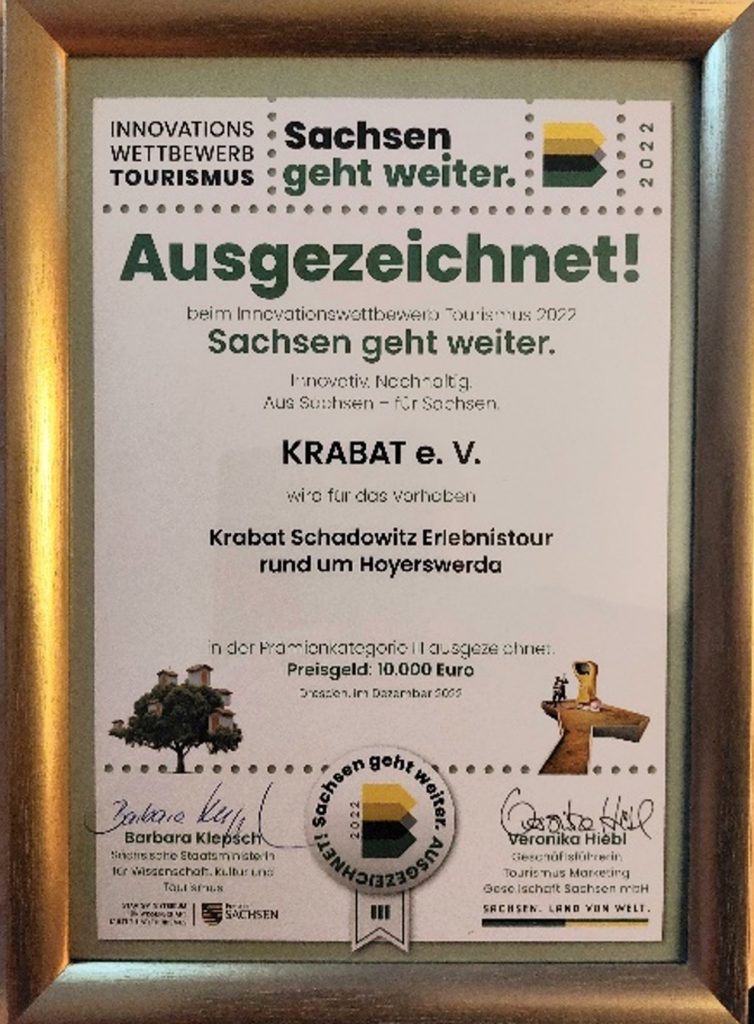
For almost two decades now, our association member Hans-Jürgen Schröter, Am Bahnhof 5 in 02997 Wittichenau, has been researching the true life of Johann von Schadowitz as the historical model for the Lusatian sorcerer KRABAT in a selfless and dedicated manner as a professional genealogist and biographer. During this time, he not only compiled fundamental historically verifiable findings, but also processed them in numerous publications, transcripts, presentations, and documentaries. He participated in project-related exhibitions in Germany, Czechia, and Croatia, is significantly involved in follow-up tourism projects on the subject of KRABAT Schadowitz, and is currently working on a title-related scientific collection of facts, a biographical narrative, and, together with a dedicated project and author team, a “Little Schadowitz Travel Book” as a guide for all those who want to embark on the KRABAT Schadowitz adventure tour around Hoyerswerda, from Schwarzkollm via Hoyerswerda and Groß-Särchen to Wittichenau, following in the footsteps of our KRABAT Schadowitz.
For more information, please follow the links below:
https://saebi.isgv.de/biografie/Johann_Schadowitz_(1624-1704)
https://familienforschung-sachsen.de/historische-mythenforschung/
https://familienforschung-sachsen.de/medien/
https://projekte.mima-hoy.de/projects/krabat-schadowitz-erlebnistour-rund-um-hoyerswerda
https://familienregion-hoy.de/krabatschadowitzerlebnistour/
https://familienregion-hoy.de/rallyes/schadowitz-skulptour/
https://www.dresden-und-umland-erleben.de/krabat-und-die-schwarzkollmer-teufelsm%C3%BChle/
- Hans-Jürgen Schröter
- Am Bahnhof 5
02997 Wittichenau - 035725-72540
- H.J.Schroeter@t-online.de